Introducing the Galleri multi-cancer early detection test

Galleri is a blood test that can detect 50+ cancer types and can be taken annually.1,2

The Galleri test is available by prescription only. The Galleri test does not detect a signal for all cancers and not all cancers can be detected in the blood. False positive and false negative results do occur. The Galleri test should be used in addition to healthcare provider recommended screening tests.

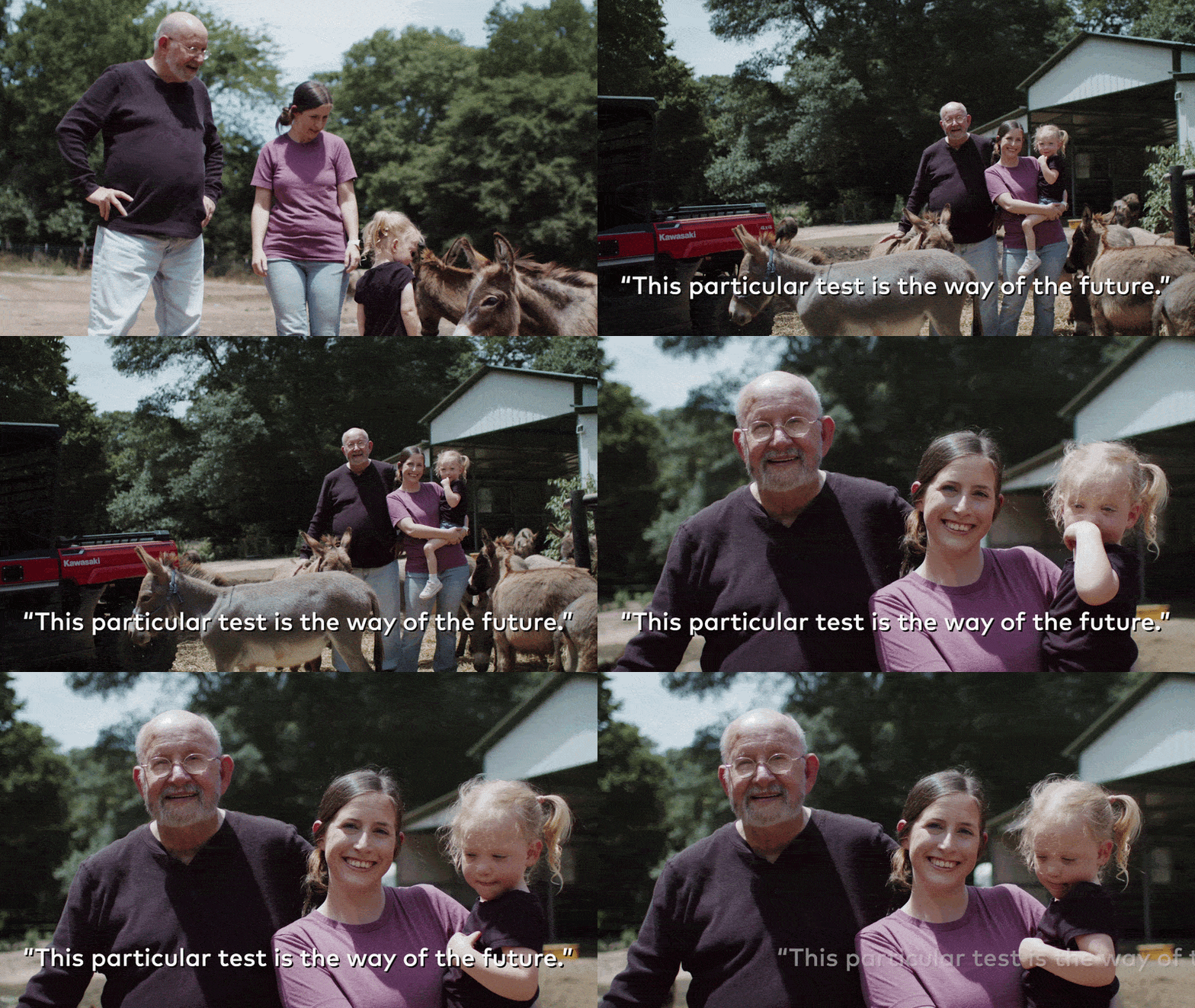
Kevin2

Patient Story: Kevin, Cancer Signal Detected with the Galleri test

Patient Story: Kevin, Cancer Signal Detected with the Galleri test

The Galleri test is available by prescription only. The Galleri test does not detect a signal for all cancers and not all cancers can be detected in the blood. False positive and false negative results do occur. The Galleri test should be used in addition to healthcare provider recommended screening tests.

Who is eligible?

The Galleri test, a multi-cancer early detection test serviced by GRAIL, is available at no cost to eligible non union employees and their dependents ages 40-49 with risk factors and 50 years and older enrolled in a Lennox UMR medical plan.

Non Union Employees4

  • Enrolled in a Lennox UMR medical plan
  • 50 years and older
  • Ages 40 to 49 with additional risk factors
  • 40-49 years old AND at least one of the following risk factors:
    • Cancer survivor who has completed treatment at least 5 years ago*
    • Currently smokes or quit smoking less than 10 years ago
    • Diagnosis of cirrhosis or chronic Hepatitis B or C infection
    • Infection with certain strains of HPV (e.g. HPV 16 or 18)
    • Known hereditary cancer syndrome
      • Confirmation or documentation of a gene mutation associated with increased cancer risk (e.g., Li-Fraumeni syndrome, Hereditary Breast and Ovarian Cancer syndrome [BRCA1/2], Lynch syndrome, and CHEK2).
  • 40-49 years old AND at least two of the following risk factors:
    • Documented genetic predisposition (germline variant)
    • First degree relative with cancer**
    • History of HIV infection
    • Current use of immunosuppressive therapies after solid organ transplant
    • Diabetes
    • BMI:
      • Female ≥ 30 kg/m2
      • Male ≥ 35 kg/m2

* excludes basal or squamous cell carcinoma of the skin

** excludes basal or squamous cell carcinoma of the skin and/or the second cancer is not a recurrence or metastasis

Please note that the Galleri test is not available for people who are currently pregnant.

woman with brown hair wearing a tan sweater and gray pants smiling softly and sitting on a chair in her living room

Dependents / spouses4

  • Enrolled in a Lennox UMR medical plan
  • 50 years and older
  • Ages 40 to 49 with additional risk factors
  • 40-49 years old AND at least one of the following risk factors:
    • Cancer survivor who has completed treatment at least 5 years ago*
    • Currently smokes or quit smoking less than 10 years ago
    • Diagnosis of cirrhosis or chronic Hepatitis B or C infection
    • Infection with certain strains of HPV (e.g. HPV 16 or 18)
    • Known hereditary cancer syndrome
      • Confirmation or documentation of a gene mutation associated with increased cancer risk (e.g., Li-Fraumeni syndrome, Hereditary Breast and Ovarian Cancer syndrome [BRCA1/2], Lynch syndrome, and CHEK2).
  • 40-49 years old AND at least two of the following risk factors:
    • Documented genetic predisposition (germline variant)
    • First degree relative with cancer**
    • History of HIV infection
    • Current use of immunosuppressive therapies after solid organ transplant
    • Diabetes
    • BMI:
      • Female ≥ 30 kg/m2
      • Male ≥ 35 kg/m2

* excludes basal or squamous cell carcinoma of the skin

** excludes basal or squamous cell carcinoma of the skin and/or the second cancer is not a recurrence or metastasis

Please note that the Galleri test is not available for people who are currently pregnant.

Black couple sitting at their kitchen table writing on a notepad with a cup of coffee and a tablet on the table in front of them

Limited data exists regarding the performance of the Galleri test in individuals <50 years of age.2,3,4

Galleri for Lennox

The Galleri test, valued at $949, is offered to eligible non union employees and their dependents at no cost.

Eligible individuals can request the test once every year, or 365 days from the time of the last blood draw.

Please select "I am using my insurance carrier" as the payment option when placing your order.

Please have your UMR insurance card ready to enter the following details for the order

Enter your name, Group Number, and ID Number exactly as they are displayed on your insurance card. 

Screen for more in 4 simple steps

illustrated graphic of a Black male doctor in a white lab coat reading a chart

Request the test

It will take about 10 minutes to complete an online health questionnaire about your medical history. The Galleri test, by GRAIL, is available by prescription only. By requesting the test and completing the questionnaire, you’re requesting a prescription from Recuro Health, an independent telemedicine provider.

illustrated graphic of the Galleri test box sitting on a table in front of a window

Receive a collection kit

If the Recuro Health telemedicine provider confirms your eligibility and prescribes the Galleri test, you will receive a notification via email and a collection kit in the mail. Visit Galleri.com/schedule to book your blood draw appointment at a GRAIL blood draw partner.

illustrated graphic of a white, gray haired female patient having her blood drawn

Provide your sample

Bring your test kit and Test Requisition Form (TRF) with you to the appointment. A trained technician will draw your blood sample and ship the kit to the GRAIL lab.

Illustrated graphic of a black man sitting in a blue armchair and reviewing test results on a tablet

Receive your results

Recuro Health will contact you when your result is ready — about 2-3 weeks after your blood is received at the GRAIL lab.

What does the Galleri test result mean?


The Galleri test detected DNA fragments associated with cancer in your blood sample. About 1 out of every 100 test has a Cancer Signal Detected result.4

This result will also include a prediction of the issue type or organ associated with the cancer signal, called a Cancer Signal Origin (CSO). This provides direction to your doctor on the cancer’s origin and can help guide the next steps for diagnosis.2,5

In a clinical study, around 6 out of 10 people with a Cancer Signal Detected result were diagnosed with cancer after diagnostic testing.6*

*Based on the first ~25,000 participants with 1 year of follow-up. 

The Galleri test does not detect a signal for all cancers and not all cancers can be detected in the blood. False positive and false negative results do occur. The Galleri test should be used in addition to healthcare provider recommended screening tests.

Cancer signal detected thumb

NEXT STEPS

A Cancer Signal Detected test result is not a cancer diagnosis and requires follow-up diagnostic testing. Such testing may include lab work or imagining ordered by your healthcare provider to confirm cancer.

The Galleri test did not detect DNA fragments associated with cancer in your blood sample. 

Nearly 99% of people who use the Galleri test will screen negative.4

This result does not completely rule out the possibility of cancer. While the Galleri test is a powerful tool, it cannot detect a signal for all cancers and not all cancers can be detected in the blood. Some cancers shed little or no DNA into the bloodstream, making them unlikely to be detected through a blood test (e.g., brain, skin, and early-stage breast and prostate cancers).7 False positive and false negative results do occur. This result does not predict whether you will develop cancer in the future. 

Cancer signal not detected thumb

NEXT STEPS

Continue with any routine cancer screenings your healthcare provider recommends. Do not ignore cancer signs or symptoms if they occur, as this could lead to delayed diagnosis.

Cancer can be unpredictable. The Galleri test can be taken as a simple blood test. Adding the Galleri test to an annual routine can improve your chance of finding cancer early.8

The Galleri test, a multi-cancer early detection test serviced by GRAIL, is available at no cost to eligible non union employees and their dependents ages 40-49 with risk factors and 50 years and older enrolled in a Lennox UMR medical plan.

To access the Galleri test as a covered benefit, you must request the test through this webpage. 

When requesting through this website, an independent telemedicine healthcare provider will review your request and order the test if appropriate. The test is available by prescription only.

The cost of the Galleri test, blood draw, and laboratory fees are all covered under this benefit at no cost to eligible employees and dependents.

An at-home or in-lab blood draw is included in the price of the test if scheduled with one of our partner labs. Find a time and location convenient for you at Galleri.com/schedule.

Please have your UMR insurance card ready.

  • Enter your name, Group Number, and ID Number exactly as they are displayed on your insurance card. Only Group IDs listed in the drop-down are eligible through Lennox’s benefit.
  • Group ID is listed as Group Number on your card and ID Number is listed as ID on your card.

If you are not eligible for the benefit under Lennox program, you may be able to use pre-tax dollars in your flexible spending account (FSA) or health savings account (HSA) to pay for the Galleri test on galleri.com. Check with your FSA or HSA administrator or insurance provider to determine eligibility.

Under the Lennox benefit program, employees and dependents are eligible for benefit coverage of the Galleri test every 12 months from the date of of the last Galleri test.

To access the Galleri test as a covered benefit, you must request the test through this web page. An independent telemedicine provider will review your request and order the test, if appropriate.

The Galleri test is provided at no cost to eligible employees and dependents only when obtained through this authorized site https://www.Galleri.com/Lennox.

The blood draw associated with Galleri must occur on a date you are covered under this employee benefit.

Employees are responsible for the full cost of the test when obtained via any other means such as a personal physician or when the blood draw date of service occurs after Lennox benefit coverage has ended.

If after taking the Galleri test, you receive a bill with out-of-pocket responsibilities from your health insurer please contact the GRAIL Billing Support Team at (833) 694‑2553 and select option two (Billing) for assistance. Our team will discuss how we may assist. 

Additionally, financial assistance is available for eligible patients who are uninsured and may be available for insured patients unable to pay the out-of-pocket amount determined by their insurance.

The cost of the Galleri test, blood draw, and laboratory fees are all covered under this benefit at no cost to eligible employees and dependents. An at-home or in-lab blood draw is included in the price of the test if scheduled with one of our partner labs. Find a time and location convenient for you at Galleri.com/schedule.

The blood draw associated with Galleri must occur on a date you are covered under this employee benefit. 

Employees are responsible for the full cost of the test when obtained via any other means such as a personal physician or when the blood draw date of service occurs after Lennox benefit coverage has ended. In the event of a Galleri Cancer Signal Detected test result, the program does not cover or pay for follow-up consults and diagnostic procedures (e.g., imaging, biopsies, other laboratory tests, etc.) that your healthcare provider may recommend. You may incur cost-share expenses such as co-pays, deductibles, and co-insurance. Please contact your health insurance member services via the phone number listed on the back of your health insurance card to determine covered expenses and your potential costs related to these recommended follow-up procedures.

Before proceeding to checkout, you should check the box to schedule a pre-test consultation with an independent telemedicine provider. This step will allow you to ask any questions such as about your risk and family history.

Get support

For questions about the Galleri test, please contact GRAIL Customer Service:

The Galleri test is recommended for use in adults with an elevated risk for cancer, such as those age 50 or older. The test does not detect all cancers and should be used in addition to routine cancer screening tests recommended by a healthcare provider. The Galleri test is intended to detect cancer signals and predict where in the body the cancer signal is located. Use of the test is not recommended in individuals who are pregnant, 21 years old or younger, or undergoing active cancer treatment.

Results should be interpreted by a healthcare provider in the context of medical history, clinical signs, and symptoms. A test result of No Cancer Signal Detected does not rule out cancer. A test result of Cancer Signal Detected requires confirmatory diagnostic evaluation by medically established procedures (e.g., imaging) to confirm cancer.

If cancer is not confirmed with further testing, it could mean that cancer is not present or testing was insufficient to detect cancer, including due to the cancer being located in a different part of the body. False positive (a cancer signal detected when cancer is not present) and false negative (a cancer signal not detected when cancer is present) test results do occur. Rx only.

The GRAIL clinical laboratory is certified under the Clinical Laboratory Improvement Amendments of 1988 (CLIA) and accredited by the College of American Pathologists. The Galleri test was developed — and its performance characteristics were determined — by GRAIL. The Galleri test has not been cleared or approved by the Food and Drug Administration. The GRAIL clinical laboratory is regulated under CLIA to perform high-complexity testing. The Galleri test is intended for clinical purposes

  1. US Preventive Services Task Force. A,B,C grade recommendations, cancer, screening [cited 2025 Mar 18]. https://www.uspreventiveservicestaskforce.org/uspstf/topic_search_results
  2. Klein EA, Richards D, Cohn A, et al. Clinical validation of a targeted methylation-based multi-cancer early detection test using an independent validation set. Ann Oncol. 2021;32(9):1167-77. doi: 10.1016/j.annonc.2021.05.806
  3. Matrana M, Shukla V, Kingsbury D, et al. Real‑world data and clinical experience from over 100,000 multi‑cancer early detection tests [poster]. American Association for Cancer Research (AACR) Annual Meeting; 2025 Apr 25-30; Chicago. https://assets.grail.com/wp-content/uploads/2025/04/7202.Matrana.AACR-2025-RWE-100K_Poster_Final.pdf
  4. Schrag D, Beer TM, McDonnell CH, et al. Blood-based tests for multicancer early detection (PATHFINDER): a prospective cohort study. Lancet. 2023;402(10409):1251-60. doi: 10.1016/S0140-6736(23)01700-2
  5. GRAIL, Inc. Enhanced Cancer Signal Origin prediction. [Data on file: VV-TMF-59592]
  6. Nabavizadeh N, et al. Safety and performance of a multi-cancer early detection (MCED) test in an intended-use population: initial results from the registrational PATHFINDER2 study [proffered presentation]. European Society for Medical Oncology (ESMO) Annual meeting: 2025 Oct 17-21; Berlin.
  7. Bredno J, Venn O, Chen X, et al. Circulating tumor DNA allele fraction: a candidate biological signal for multi-cancer early detection tests to assess the clinical significance of cancers. Am J Pathol. 2022; 192(10):1368-78. doi:10.1016/j.ajpath.2022.07.007
  8. Sasieni P, Clarke CA, Hubbell E. Impact of MCED screening interval on reduction in late-stage cancer diagnosis and mortality. European Society for Medical Oncology (ESMO) Virtual Congress [poster]; 2021 Sep 16-21.